Safety in Full View: How the FIA’s AI-assisted cameras are bringing new levels of safety to closed road events
Day one of FIA Safety Week 2026 revealed just how successful the Federation’s AI Safety Camera has been in identifying potential issues in real time in the European Rally Championship and how the system is being expanded for the future.
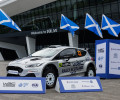
Supported by the FIA Foundation and first introduced at the opening round of the 2025 FIA European Rally Championship in Spain last April the AI Safety Camera provided rally safety officials with a state-of-the-art step forward in rally safety, tackling the challenge of managing spectator safety across often remote terrain by providing real-time, stage-level insight into spectator locations.
Developed in collaboration with Croatian tech startup Calirad, the car-mounted camera uses AI-powered human detection to identify spectators along the stage route, including those moving into unsafe areas during the rally. Data is processed instantly and if the system detects a potential issue an alert is sent to event officials so that pre-emptive safety measures can be taken before the next competitor arrives. The system has GSM and Wi-Fi capability and in remote areas uses Starlink to ensure there’s no drop out.
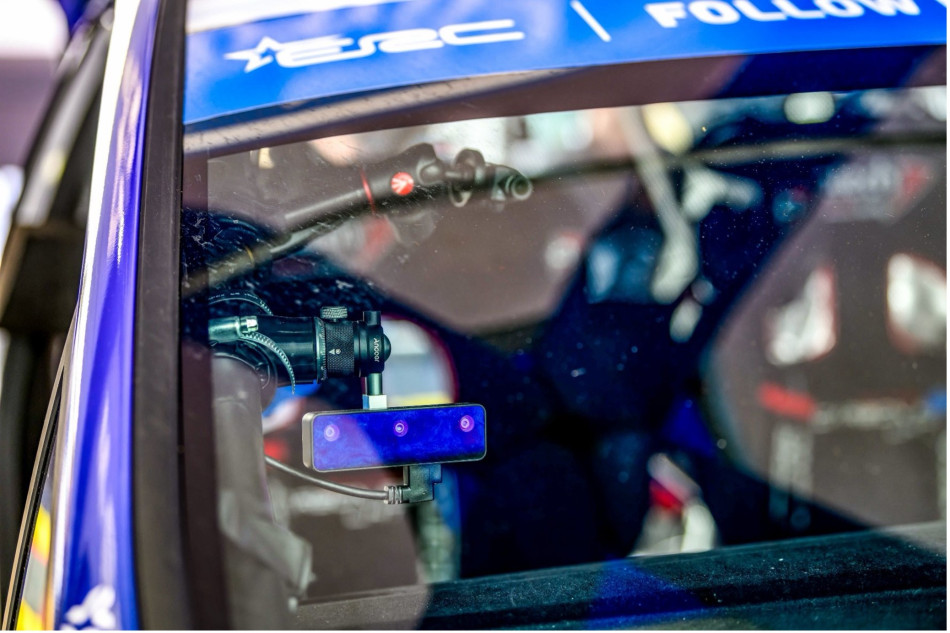
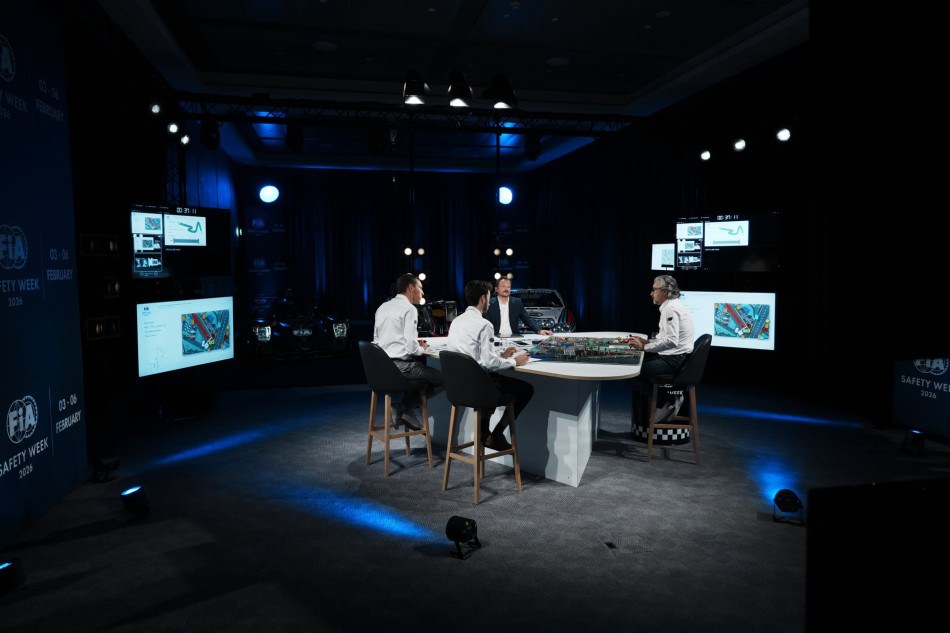
Employed in five competing cars at each round of the 2025 FIA ERC, the results have been impressive, as FIA Closed Road Safety Engineer Yann Dion revealed in the Closed Road Seminar held on the opening day of FIA Safety Week 2026.
“We’ve seen that the AISC is truly a revolution for risk control because now officials can see what’s happening on a stage – at every point,” he said. “In the past you had to rely only on your marshals, and it was sometimes difficult to see exactly what’s happening across stages. Now race control has the power to act instantly.
“Every 15 minutes, every 10 cars or so, we have a camera, so you can see what is the state of the stage? Where are the spectators, have they moved, is there a security risk? You can see the evolution of the stage as the cars pass through it.
“To give you some detail. In 2025 more than 100,000 images were generated, which led to a massive amount of review for the safety officers that were handling the tool in race control. The system sent approximately 1,100 alerts that led to discussions in race control about whether this situation was dangerous, and if it was deemed to be, to rapid on-the-ground action using the marshals.”
Dion also explained that the system is being constantly developed with greater levels of detail added to “provide more and more information to the safety officer in order to make precise decisions”. The improvements, he said, include the speed of the car, the position, the angle of the corner and reference to safety plan information.
Finally, Dion revealed that with the system proving so valuable, the FIA is working on broadening availability.
“We are building a set of specifications in order to allow a wider set of manufacturers to build this kind of tool,” he said. "For now it’s only a start-up but we are trying to expand the market of these tools.”
Tracking devices: updated specifications and a next-generation roadmap
To further advance in-stage monitoring, the FIA is working on updated technical specifications for the tracking systems that locate competitors throughout stages.
“The original specification was developed in 2021 and that is now being updated,” said Dion.
“Throughout 2025 we have developed a new specification, we are in the last stages of finalising it and we hope to release the new specification in 2026. It will have implications on the previous roadmap, so I encourage any tracking device providers to engage with the FIA to fit the device into the new specification.”
Common Safety cause: standardising the closed road safety data ecosystem
While both systems have proven successful, manufacturing and deployment are not always smooth processes and to make development and integration more seamless, the FIA has developed a common dataset design to assist manufacturers and service providers.
“After a lot of discussion with providers the conclusion was that they all share the same problems: they are not able to exchange relevant information with each other,” explains Dion. “Event organisers put together a Safety Plan for a rally, but they have to do that in several different ways, for tracking providers, to work with AI safety camera providers, and no one can talk to each other.
“Now our Working Groups are working on a single clear dataset so that all stakeholders can work together in the future. This is fundamental, allowing everyone to talk to each other about the same issues. So that’s the groundwork we are doing now, on our side and with manufacturers.”
Guiding the way: Safety Guidelines updated
Finally, FIA Head of Operational Safety Clément Lauté, recommended that stakeholders also continue to reference Close Road-related FIA Safety Guidelines on the FIA website, which are regularly updated.
“The newly created Cross-Country Rally Safety Guidelines will be updated on a yearly basis, and the updated Hill Climb guidelines will be available next month,” he said. “The Rally Safety Guidelines, the bible – the 2025 edition is available, and the 2026 edition is just around the corner. The list of updates is ready, and we just need to wait for the document to be ready to share. This edition has been translated into seven languages, and more are required just let us know.
“We have focused on some specific areas of concern, starting by with private test safety, duties of rally safety delegates, and related to what we discussed, information or smart tracking providers and rally tracking usage guidelines – how to select a tracker, what are the criteria, how to have the discussion with the tracking providers, how to support them because they need also to receive the good quality of the data, connected to the working group about the data language we want to deploy this year.”
 Facebook
 Twitter