All-new FIA Formula Regional European Championship is go
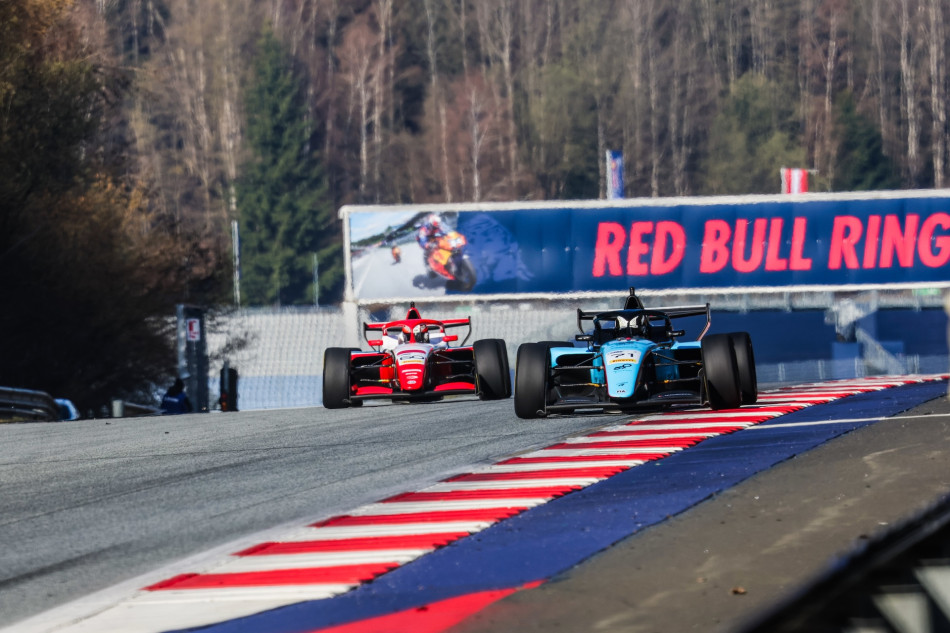
An exciting new chapter begins in Austria this week when the all-new FIA Formula Regional European Championship gets under way at the Red Bull Ring.

Taking over from the Formula Regional European Championship by Alpine (FRECA), the FIA Formula Regional European Championship (FIA FREC) enjoys the full support of the Fédération Internationale de l’Automobile, the global governing body for motor sport and the federation for mobility organisations worldwide.
Organised and promoted by FIA Member Club Automobile Club d’Italia (ACI), the inaugural FIA FREC schedule covers eight weekends from April to September with five FIA Formula One World Championship venues included.
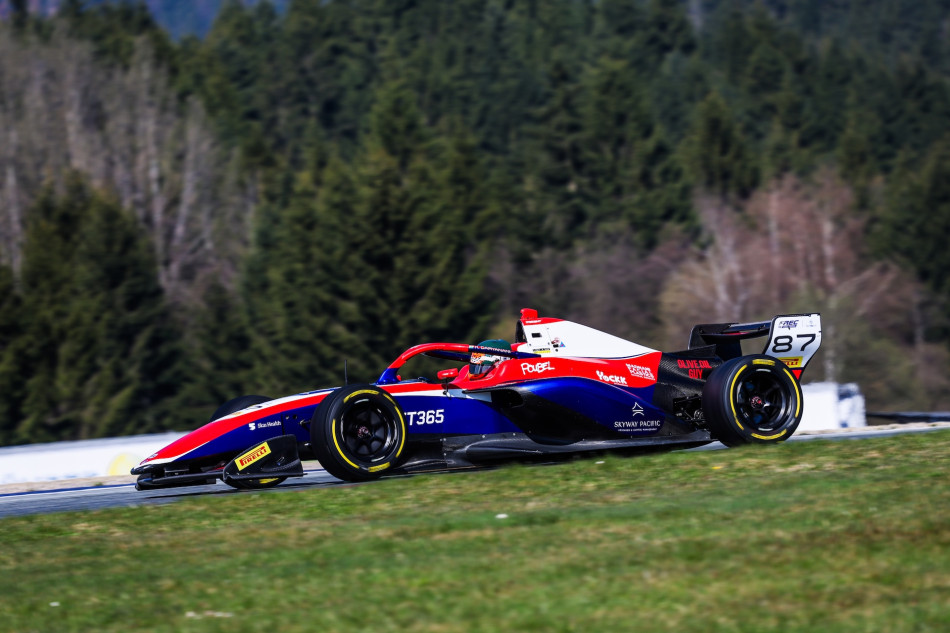
Positioned one step above Formula 4 in the FIA Single-Seater Pyramid, FIA FREC caters exclusively for the second-generation Formula Regional Tatuus T-326. All-new for 2026, the car has been developed by the Italian constructor in partnership with the FIA and follows the aerodynamic philosophy deployed in Formula 1 to encourage closer racing. Its design also represents another step in terms of performance and safety.
Ten teams have been successful in securing entries for the 2026 season with each fielding three up-and-coming racers for a 30-car line-up. They are: ART Grand Prix, CL Motorsport, G4 Racing, MP Motorsport, Prema Racing, R-Ace GP, Rodin Motorsport, RPM Motorsport, Trident Motorsport and Van Amersfoort Racing. All teams use Pirelli tyres.
FIA Single-Seater Commission President Emanuele Pirro said: “A European championship has historically been the place where emerging talents from all over the world come and compete all together for the first time to showcase their potential on circuits that will really test their skills. I’m sure it is here we will start to see the stars of the future rising to the top once again and we are looking forward for the season to begin. Whether they are stepping up from Formula 4 or switching from another Formula Regional championship, we expect FIA FREC to be the final launching path before the global F3, F2 and, ultimately, F1 championships await the very best drivers.
“The second-generation Formula Regional car hits all the objectives we have set for this level of single-seater racing. The car will be more raceable with new aerodynamics and longer-life tyres, whilst also being faster and safer – this is an important achievement thanks to the work of the FIA. I’d also like to thank ACI and Tatuus for their commitment to this European championship – we are making this platform essential for any young racing drivers looking to progress to the next step on the FIA Single-Seater Pyramid.”
Introducing Race Mode
Drivers contesting the inaugural FIA Formula Regional European Championship in 2026 will be able to utilise Race Mode in their pursuit of on-track success.
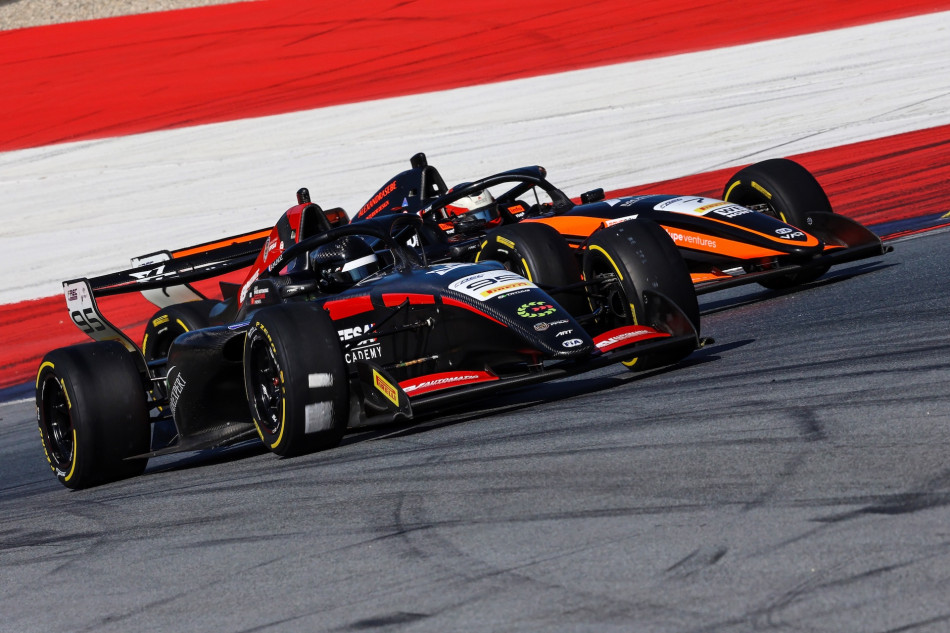
The new Race Mode push to pass system allows drivers to trigger full engine performance for a period of time when activated by a button pressed from inside the cockpit.
Its introduction for the 2026 FIA Formula Regional European Championship season is the result of extensive research and development managed by the FIA.
Experts from the FIA’s Technical Department oversaw simulations of Race Mode in conjunction with the FIA’s Formula 1 aerodynamicists, while Tatuus, constructor of the second-generation Formula Regional Tatuus T-326, and engine supplier, ATM, managed the software upgrading and validation process.
The introduction of Race Mode also follows a successful test at Monza in Italy in mid-March and further running during the second day of the official FIA FREC test at Circuit Paul Ricard in France, which ended on 31 March.
Drivers were then able to use the final specification of the FIA FREC Race Mode system during the concluding pre-season test at Red Bull Ring from 4-5 April.
The use of Race Mode in FIA FREC comes on the back of an update to the championship’s Sporting Regulations.
Race Mode will be used to enhance strategy and provide even more overtaking opportunities in all FIA FREC races with drivers benefitting from the full power of the Tatuus T-326’s new three-cylinder ATM163T engine, developed by Autotecnica Motori and derived from the Toyota G16E unit.
FIA FREC teams can simulate Race Mode during free practice and test sessions by setting the power output. However, Race Mode won’t be engaged for qualifying.
Where and when?
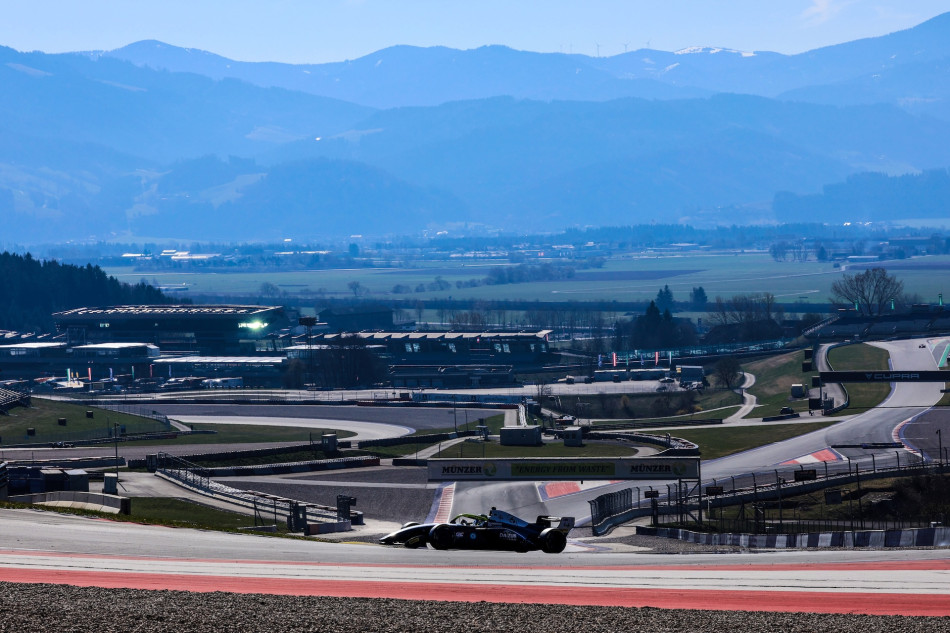
The 2026 FIA Formula Regional European Championship calendar takes place over eight weekends as follows: Red Bull Ring, Austria (24-26 April), Zandvoort, Netherlands (22-24 May), Spa-Francorchamps, Belgium (29-31 May), Monza, Italy (19-21 June), Hungaroring, Hungary (3-5 July), Paul Ricard, France (17-19 July), Imola, Italy (4-6 September) and Hockenheim, Germany (11-13 September). Pre-season tests took place at Hockenheim, Paul Ricard and Red Bull Ring.
Who’s in it to win it?
Click HERE for the 2026 FIA Formula Regional European Championship line-up.
FIA FREC round one at a glance
Friday 24 April
10:25-11:15: Free Practice
17:20-17:55: Qualifying 1
Saturday 25 April
10:25-10:55: Race 1 (30 minutes plus one lap)
16:40-17:10: Race 2 (30 minutes plus one lap)
Sunday 26 April
08:45-09:20: Qualifying 2
16:40-17:10: Race 3 (30 minutes plus one lap)
How it works?
The 2026 FIA Formula Regional European Championship takes place over eight rounds between April and September. Events consist of either two qualifying sessions and three races or one qualifying session and two races. Track time is further maximised with the scheduling of a free practice session during all events.
Qualifying sessions are scheduled for 30 minutes with two groups created (Group A and Group B) during the day of scrutineering. Each group is permitted 15 minutes of track time. The results of a ballot are used to determine which group of drivers takes part in the first 15 minutes and which group takes part in the final 15 minutes.
The group formations are based on odd and even numbers for the opening event of the season and championship positions thereafter. At events with two qualifying sessions, the group of drivers going first in Qualifying 1 go second in Qualifying 2 and vice versa.
At events with two races, the grid for Race 1 is based on the results of Qualifying with the fastest 12 drivers lining up in reverse order of their Qualifying result for Race 2.
At events with three races, the grid for Race 1 is based on the results of Qualifying 1. Race 2 counts as the reverse-grid race with the fastest 12 drivers lining up in reverse order of their Qualifying 1 result. The Race 3 grid is based on the results of Qualifying 2.
The overall fastest driver out of both groups (Group A and Group B) starts from pole position. Second position goes to the driver achieving the fastest time in the ‘other’ group with third place awarded to the driver who has achieved the second fastest time in the group of the overall fastest driver, and so on. Should two or more drivers set identical times, priority will be given to the driver who set the time first.
How they score?
Race: 1st = 25 points; 2nd = 18 points; 3rd = 15 points; 4th = 12 points; 5th = 10 points; 6th = 8 points; 7th = 6 points; 8th = 4 points; 9th = 2 points; 10th = 1 point; pole Position = 2 points; fastest lap = 1 point. Reverse grid race: 1st = 10 points; 2nd = 9 points; 3rd = 8 points; 4th = 7 points; 5th = 6 points; 6th = 5 points; 7th = 4 points; 8th = 3 points; 9th = 2 points; 10th = 1 point; fastest lap = 1 point. FIA Driver, Team and Rookie titles will be awarded.
 Facebook
 Twitter